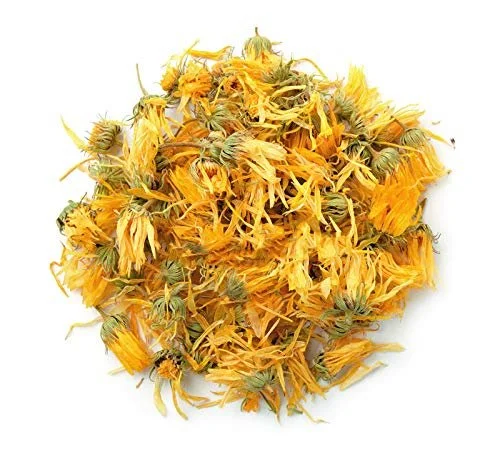
Calendula petals carry carotenoids — the same family of pigments that give carrots their color — along with a gentle, saffron-like hue for soups and teas.
Calendula is a bright orange or yellow flower often used in teas and culinary dishes. It’s known for its mild flavor and beautiful color. The petals are edible and can be used to enhance both the visual appeal and nutritional value of plant-based meals. Calendula has a long history of use in traditional wellness practices and is often associated with skin and overall wellness support. It’s a simple way to bring both beauty and nourishment into everyday meals.
Key Benefits
• Adds natural color to meals
• Supports antioxidant intake
• Gentle and easy to use
• Supports skin-conscious nutrition
• Enhances plant-based presentation
Key Nutrients
• Carotenoids
• Flavonoids
• Antioxidants
Nutrition Facts (per 1 cup calendula tea)
• Calories: ~2
• Carbs: ~0 g
• Fiber: ~0 g
• Protein: ~0 g
• Fat: ~0 g
Source: USDA FoodData Central
Easy Ways to Use Calendula
• Steep petals into tea
• Sprinkle into salads
• Add to rice or grain bowls
• Use as a garnish for color
How to Choose and Store
How to choose
Look for bright, intact petals with a fresh, mild scent.
How to store
• Store in an airtight container
• Keep away from moisture and light
How long it lasts
About 6–12 months when stored properly
Pairs Well With
• Rice
• Citrus
• Herbal teas
• Leafy greens
• Lemon
Conditions Calendula May Help Support
This section is not medical advice.
Calendula may support:
• Antioxidant-rich nutrition patterns
• Skin-supportive nutrition
• Balanced plant-forward eating
• Gentle wellness support