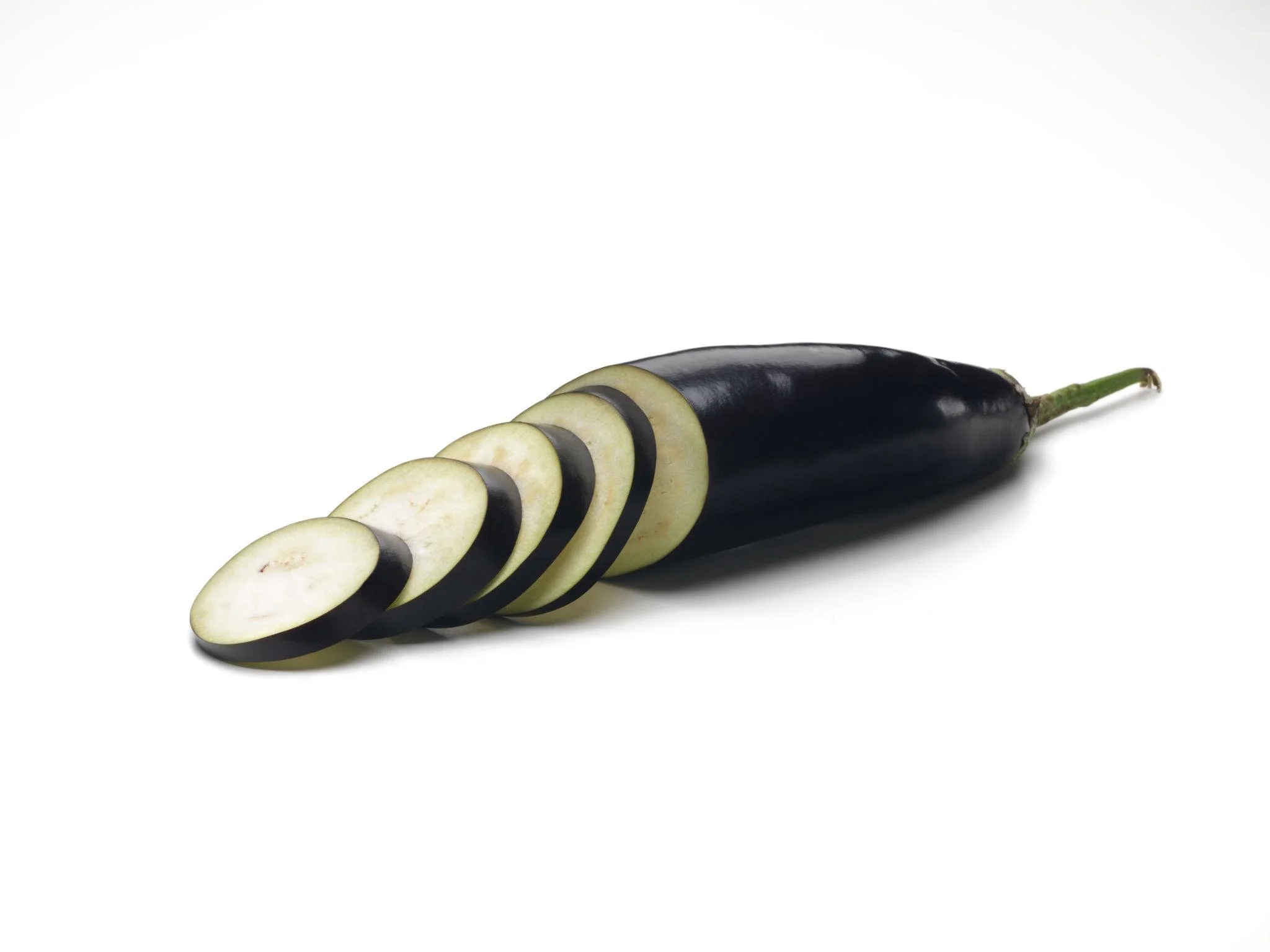
Eggplant is a deep purple vegetable with a creamy texture when cooked. It absorbs flavors beautifully and works well in roasted, grilled, and baked dishes.
Though often treated like a starch because of its hearty texture, eggplant is low in calories and rich in fiber and antioxidant compounds, particularly in its purple skin.
Key Benefits
• Adds hearty texture to plant-based meals
• Supports digestive wellness
• Contributes antioxidant compounds
• Encourages satisfying vegetable-based dishes
• Low-calorie, high-volume food
Key Nutrients
• Fiber
• Potassium
• Vitamin B6
• Antioxidant compounds (including nasunin)
Nutrition Facts (per 1 cup cooked eggplant)
• Calories: ~35
• Carbs: ~9g
• Fiber: ~2g
• Protein: ~1g
• Fat: ~0g
Source: USDA FoodData Central
Easy Ways to Eat Eggplant
• Roast into cubes for grain bowls
• Grill and layer into sandwiches
• Bake into casseroles
• Blend into dips
• Add to Mediterranean stews
How to Choose and Store
How to choose
Look for smooth, glossy skin without wrinkles or soft spots.
How to store
• Refrigerate in produce drawer
How long it lasts
4 to 7 days refrigerated
Pairs Well With
• Tomatoes
• Garlic
• Tahini
• Chickpeas
• Olive oil
Conditions Eggplant May Help Support
This section is not medical advice.
Eggplant may support
• Heart-supportive eating patterns
• Digestive wellness
• Antioxidant intake
For medical nutrition therapy, consult a licensed provider.