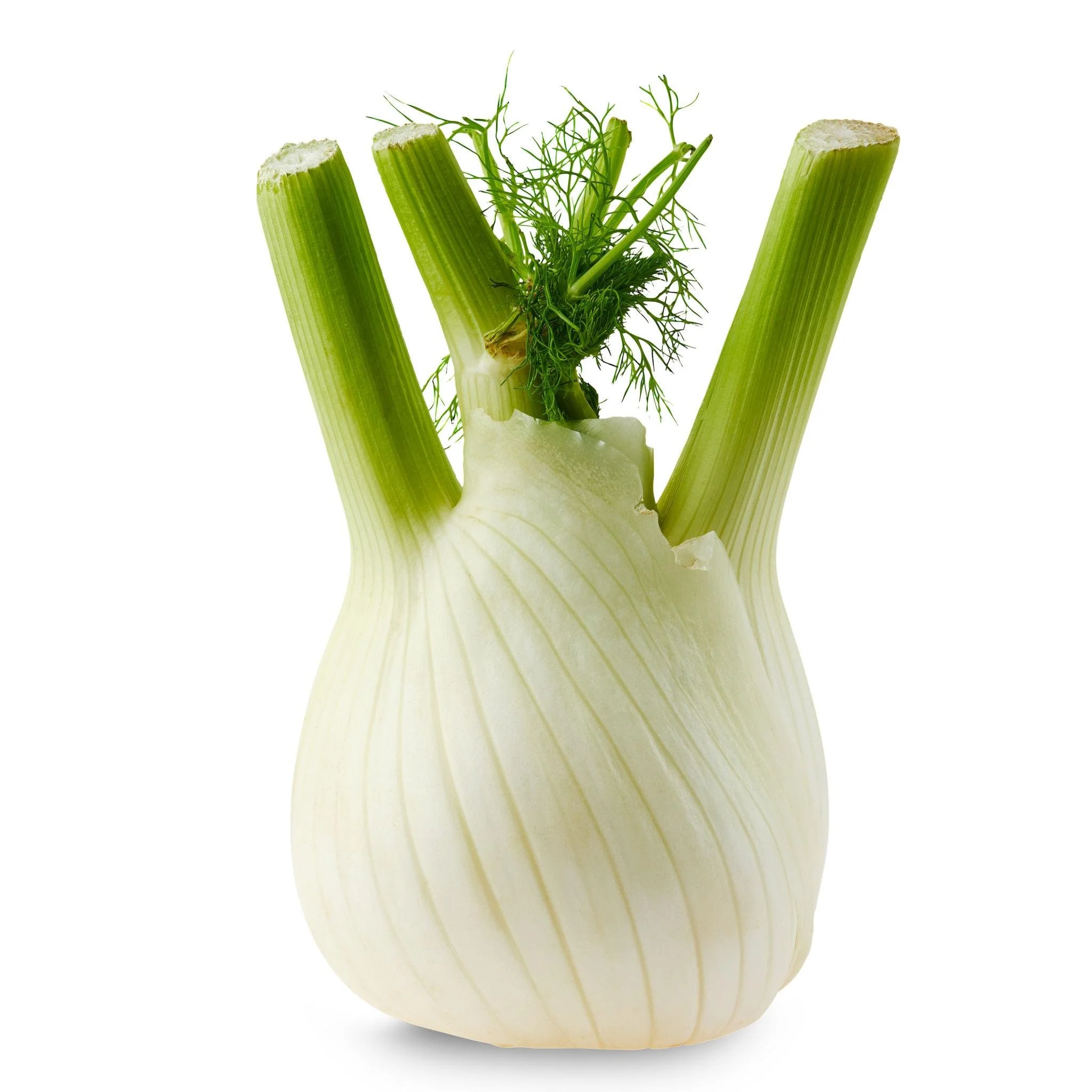
Fennel is a pale green bulb vegetable with feathery fronds and a subtle licorice-like flavor. It becomes mellow and slightly sweet when cooked.
Often used in Mediterranean cooking, fennel adds brightness and depth to plant-based dishes. The bulb, stalks, and fronds are all edible, making it a versatile vegetable for roasting, sautéing, or slicing thin into salads.
Key Benefits
• Supports digestive comfort
• Adds flavor without heavy sauces
• Contributes antioxidant plant compounds
• Encourages vegetable variety
• Low-calorie, high-volume vegetable
Key Nutrients
• Vitamin C
• Fiber
• Potassium
• Folate (small amounts)
• Antioxidant compounds
Nutrition Facts (per 1 cup sliced raw fennel)
• Calories: ~27
• Carbs: ~6g
• Fiber: ~3g
• Protein: ~1g
• Fat: ~0g
Source: USDA FoodData Central
Easy Ways to Eat Fennel
• Slice thin into citrus salads
• Roast with olive oil
• Add to vegetable soups
• Sauté with onions and garlic
• Use fronds as an herb garnish
How to Choose and Store
How to choose
Look for firm white bulbs without browning and fresh green fronds.
How to store
• Refrigerate in produce drawer
• Wrap loosely to retain freshness
How long it lasts
5 to 7 days refrigerated
Pairs Well With
• Orange
• Lemon
• Garlic
• Olive oil
• White beans
• Tomatoes
Conditions Fennel May Help Support (Plant Pantry Wellness Notes)
This section is not medical advice.
Fennel may be helpful for those focusing on
• Digestive wellness
• Heart-supportive eating patterns
• Increasing vegetable diversity
For medical nutrition therapy, consult a licensed provider.