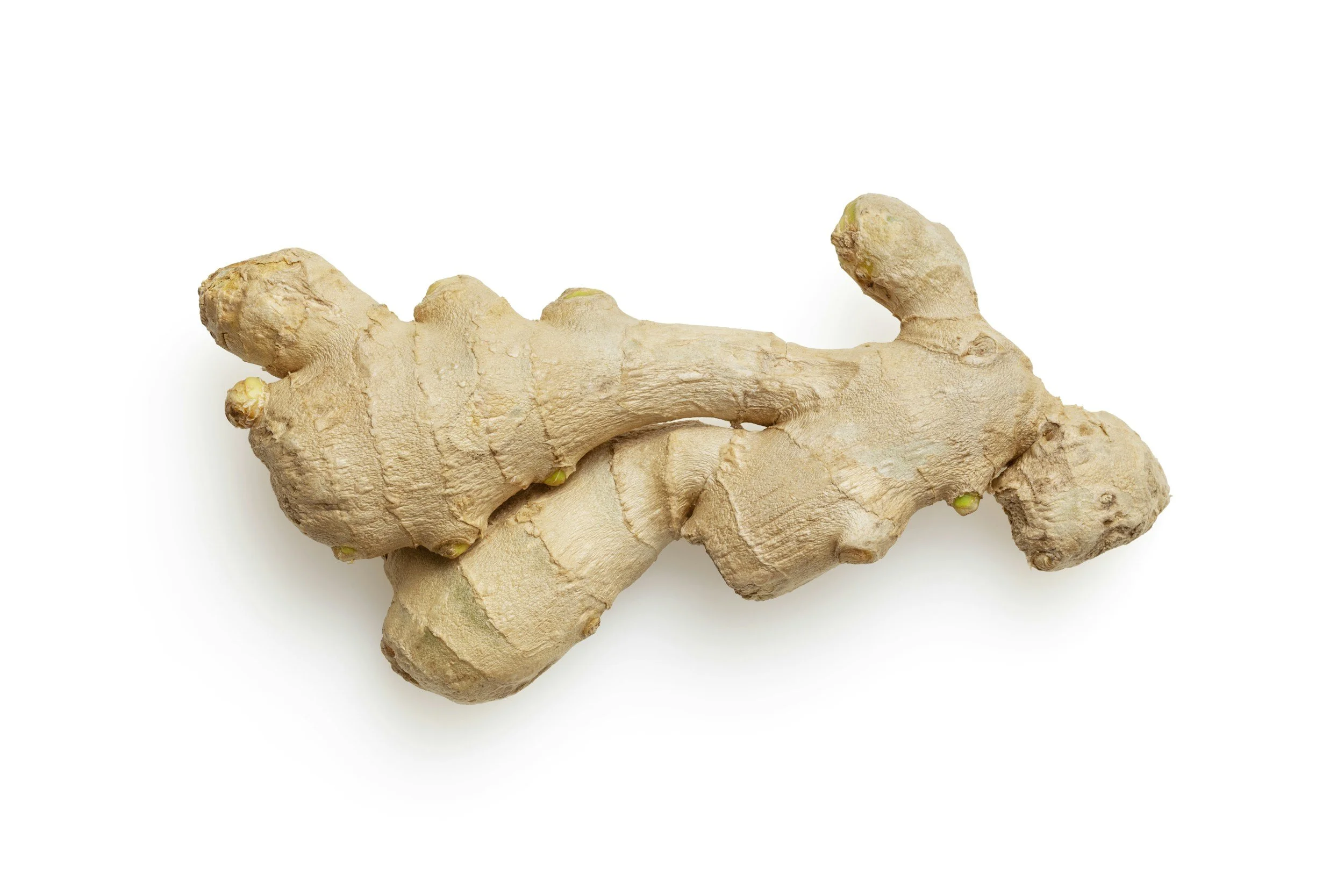
Ginger is one of those powerhouse pantry foods that can quietly upgrade your entire kitchen. It’s warming, flavorful, and deeply supportive, especially when you’re trying to eat in a way that feels clean, nourishing, and intentional. For plant-based beginners, ginger is a game-changer because it adds bold flavor without needing heavy sauces, dairy, or complicated ingredients.
Quick Snapshot
Ginger is a spicy, aromatic root (technically a rhizome) commonly used in cooking, teas, and wellness traditions. It contains natural plant compounds like gingerol that support inflammation balance and digestive comfort. Ginger can be grated fresh into stir-fries, blended into smoothies, steeped into tea, or added to soups for warmth and depth.
Key Benefits
• Supports digestive comfort (especially after meals)
• Supports nausea relief (commonly used for motion sickness and morning nausea)
• Supports inflammation balance with antioxidant compounds
• Supports immune wellness as part of a whole-food routine
• Adds bold flavor to plant-based meals without heavy ingredients
Key Nutrients
• Gingerol (bioactive plant compound)
• Antioxidants
• Small amounts of magnesium
• Potassium
• Vitamin B6
Nutrition Facts (per 1 tablespoon fresh ginger, grated)
• Calories: ~5
• Carbs: ~1g
• Fiber: ~0.1g
• Protein: ~0.1g
• Fat: ~0g
• Sugar: ~0.1g
Source: USDA FoodData Central
Easy Ways to Eat Ginger
• Steep fresh slices in hot water with lemon for ginger tea
• Grate into stir-fries with garlic, soy sauce, and veggies
• Add to smoothies for a spicy wellness boost (pairs great with pineapple or mango)
• Blend into salad dressings with lime, olive oil, and a touch of maple
• Add to soups like lentil, carrot, or miso broth for warmth
• Stir into oatmeal with cinnamon and chopped apples
• Mix into chickpea or tofu marinades for extra flavor
How to Choose and Store Ginger
How to choose: Look for ginger that feels firm and heavy for its size with smooth skin and a strong fresh scent.
How to store:
• Store unpeeled ginger in the fridge in a paper towel or breathable bag
• For longer storage, freeze whole ginger and grate straight from frozen
How long it lasts: About 2–4 weeks in the fridge, and up to 6 months in the freezer
Pairs Well With
• Lemon
• Garlic
• Pineapple
• Coconut milk
• Carrots
• Soy sauce or tamari
Conditions Ginger May Help Support (Plant Pantry Wellness Notes)
This section is not medical advice. It’s a “what the research suggests” support list.
Ginger may be a helpful food choice for people focusing on:
• Digestive health support
• Nausea support (including motion-related nausea)
• Inflammation balance goals
• Immune support routines
• Heart health support as part of an overall whole-food eating pattern
For medical nutrition therapy, always consult a licensed provider.