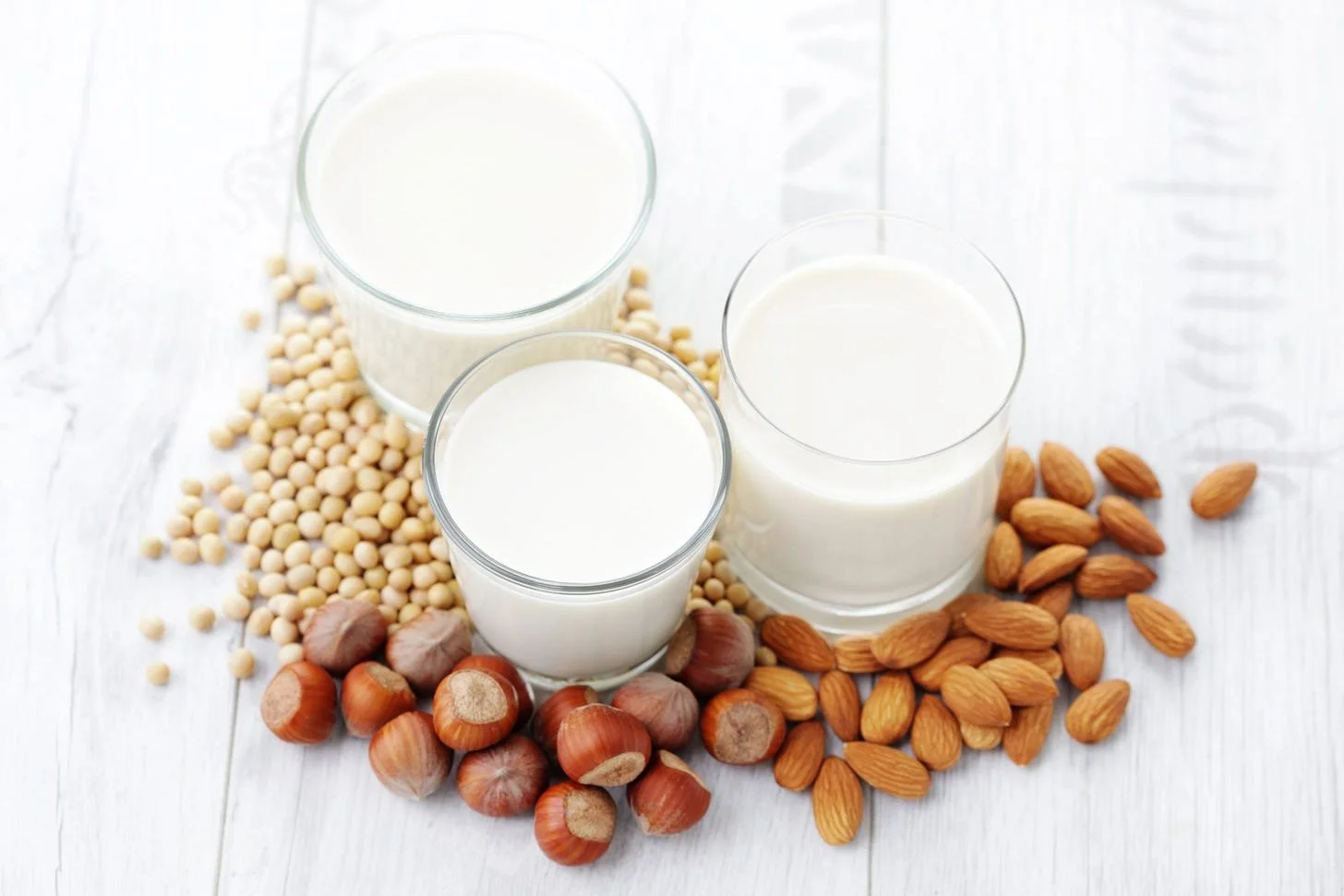
Plant-based milks are dairy-free alternatives that support easy transitions into plant-based living and everyday meal flexibility.
Dairy-Free milks are made by blending plant ingredients like nuts, grains, or legumes with water. They offer a simple, accessible way to replace traditional dairy in daily routines.
They are commonly used in coffee, cereal, smoothies, baking, and cooking.
Dairy-Free milks support a flexible, plant-forward lifestyle while offering a variety of flavors and textures to match personal preferences.
Ways It Helps Health
• Supports dairy-free living
• Supports digestion for those avoiding dairy
• Supports lighter, flexible nutrition choices
• Provides vitamins and minerals when fortified
• Supports an easy transition into plant-based eating
Key Benefits
• Easy swap for dairy milk
• Widely available
• Versatile for daily use
• Variety of flavors and textures
• Beginner-friendly
Key Nutrients
• Calcium (fortified)
• Vitamin D (fortified)
• Vitamin B12 (fortified)
• Vitamin E (in some varieties)
Common Types
• Almond milk
• Oat milk
• Soy milk
• Coconut milk (beverage)
• Cashew milk
How to Choose
• Choose unsweetened for everyday use
• Look for calcium and B12 fortification
• Select based on taste and texture preference
• Use oat milk for creaminess, almond for lightness, soy for protein
Nutrition Snapshot (varies by type, per 1 cup)
• Calories: ~30–120
• Protein: ~1–8 g
• Fat: ~2–5 g
Easy Ways to Use
• Add to coffee or tea
• Pour over cereal or oatmeal
• Blend into smoothies
• Use in baking
• Add to sauces and soups