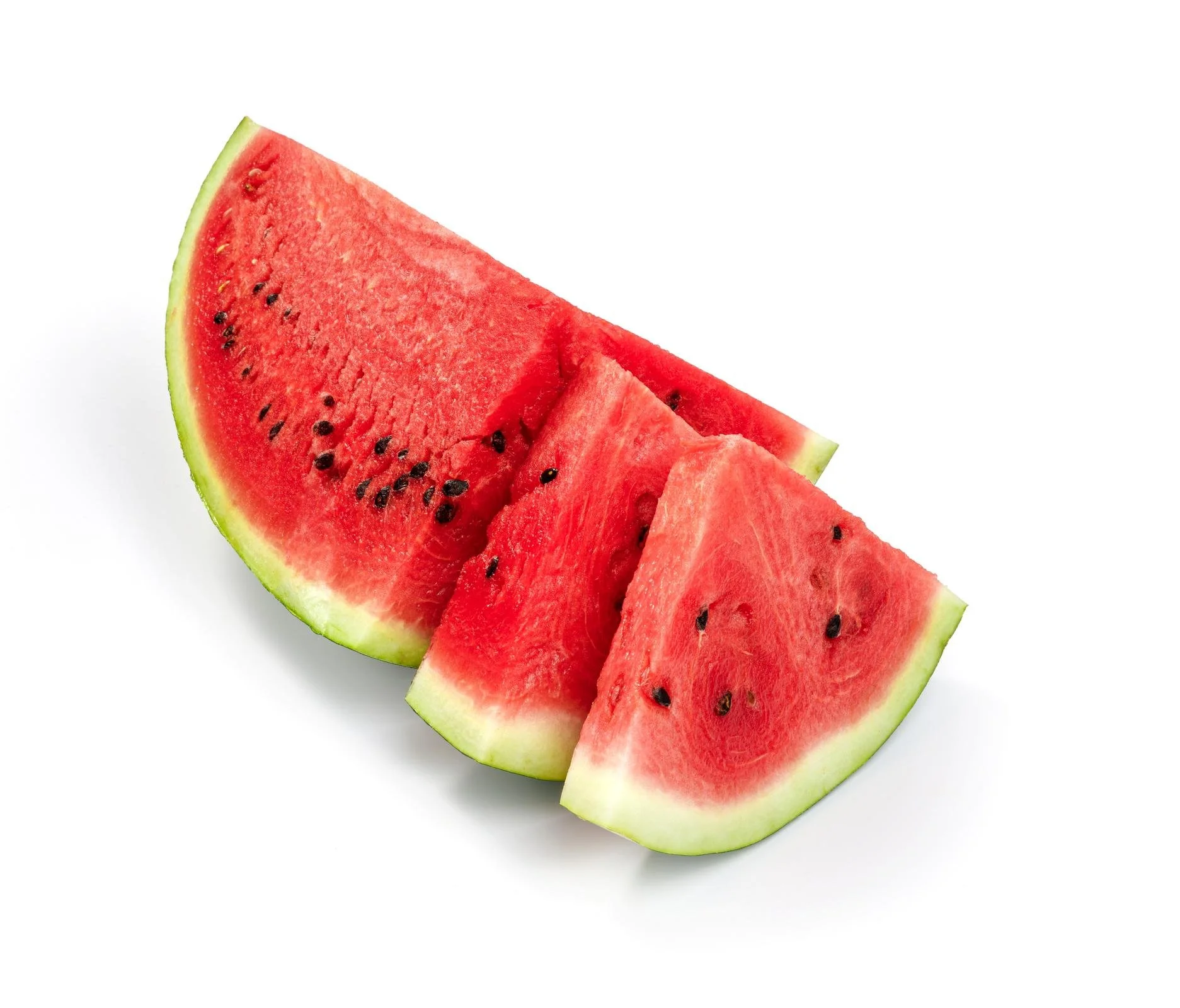
Watermelon is a refreshing fruit known for its natural sweetness and high water content. It adds hydration, color, and light sweetness to plant-based meals and summer snacks.
Watermelon is one of the most hydrating fruits, made up of more than 90 percent water. Its juicy texture and naturally sweet flavor make it a favorite for warm weather meals, snacks, and smoothies.
In addition to its refreshing taste, watermelon contains vitamin C, vitamin A, and beneficial antioxidants like lycopene, which support overall wellness. Its bright red color comes from these powerful plant compounds.
Watermelon is easy to enjoy on its own, blended into drinks, added to fruit salads, or paired with herbs and citrus for vibrant plant-forward dishes.
Key Benefits
• Supports hydration due to high water content
• Provides antioxidants that support cellular health
• Supports immune wellness with vitamin C
• Supports heart-supportive eating patterns
• Adds natural sweetness to meals and snacks
Key Nutrients
• Vitamin C
• Vitamin A
• Potassium
• Lycopene
• Antioxidants
• Natural plant sugars
Nutrition Facts (per 1 cup diced watermelon)
• Calories: ~46
• Carbs: ~11 g
• Fiber: ~1 g
• Protein: ~1 g
• Fat: ~0 g
• Sugar: ~9 g
Source: USDA FoodData Central
Easy Ways to Eat Watermelon
• Enjoy fresh slices as a snack
• Add cubes to fruit salads
• Blend into smoothies or juice
• Toss with lime juice and mint
• Add to summer salads with cucumber
• Freeze cubes for refreshing treats
How to Choose and Store
How to choose
Look for a watermelon that feels heavy for its size with a creamy yellow field spot on the rind.
How to store
• Store whole watermelon at room temperature
• Refrigerate once cut
How long it lasts
Whole watermelon lasts about 1 week. Cut watermelon keeps about 3–4 days in the refrigerator.
Pairs Well With
• Mint
• Lime
• Cucumber
• Strawberries
• Basil
• Citrus
• Pineapple
Conditions Watermelon May Help Support
This section is not medical advice.
Watermelon may support:
• Hydration support
• Heart-supportive nutrition patterns
• Antioxidant-rich nutrition patterns
• Balanced plant-forward eating