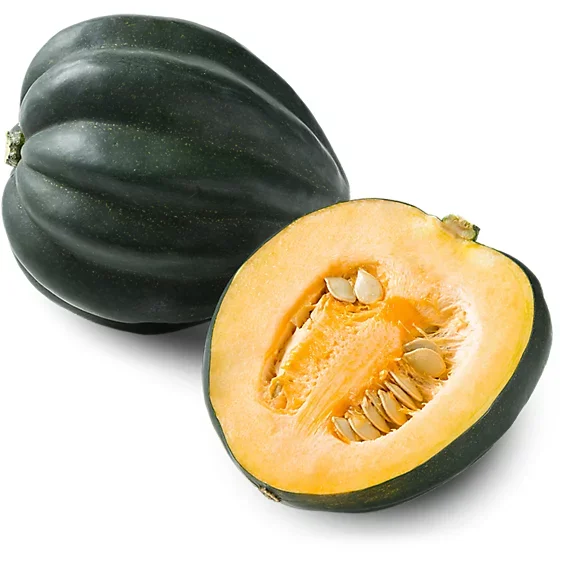
Sweet, tender, and shaped for stuffing — acorn squash is one of fall's most comforting plant-based staples.
Acorn squash is a small winter squash known for its deep green ridged skin and tender golden flesh. When roasted, it develops a mild sweetness and creamy texture that makes it perfect for simple, comforting meals. Its bowl-like shape also makes it ideal for stuffing with grains, beans, and vegetables.
Quick Snapshot
Acorn squash is a fiber-rich winter squash with vitamins A and C. Its naturally sweet flavor deepens when roasted, making it a favorite for cozy plant-based dishes.
Key Benefits
• Supports immune wellness with vitamin C
• Supports eye wellness with vitamin A precursors
• Supports digestion with fiber
• Provides antioxidants for cellular wellness
• A naturally sweet vegetable for satisfying plant-forward meals
Key Nutrients
• Vitamin A (beta-carotene)
• Vitamin C
• Fiber
• Potassium
• Magnesium
Nutrition Facts (per 1 cup cooked acorn squash)
• Calories: ~115
• Carbs: ~30g
• Fiber: ~9g
• Protein: ~2g
• Fat: ~0g
• Sugar: ~4g
Source: USDA FoodData Central
Easy Ways to Eat Acorn Squash
• Roast halves with olive oil and herbs
• Stuff with quinoa, lentils, or rice
• Roast wedges for grain bowls
• Blend into vegetable soups
• Add roasted cubes to salads
How to Choose and Store
How to choose: Look for squash with deep green skin and firm texture without soft spots.
How to store:
• Store in a cool, dry place
• Refrigerate after cutting
How long it lasts:
Whole acorn squash can last 1–2 months.
Pairs Well With
• Maple
• Sage
• Garlic
• Wild rice
• Lentils
• Cranberries
Conditions Acorn Squash May Help Support
Acorn squash may support:
• Immune health support
• Digestive wellness support
• Heart-healthy eating patterns
• Balanced plant-forward nutrition