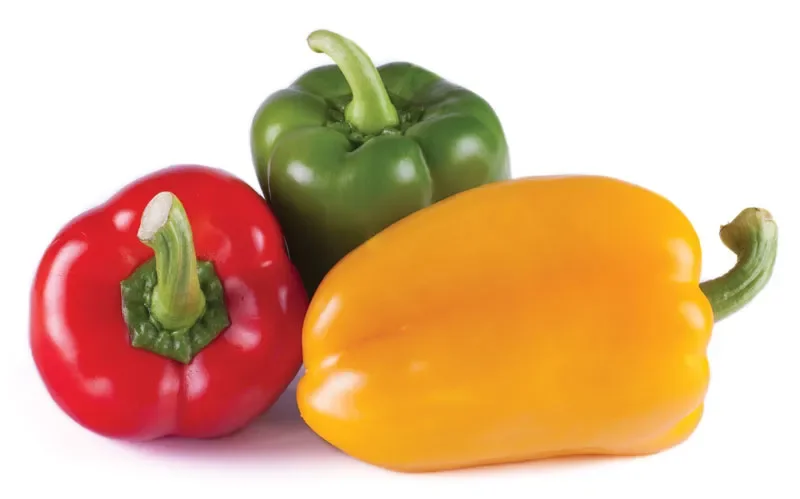
Bell peppers are a crisp, colorful veggie that instantly makes meals look brighter and taste fresher. They’re naturally sweet (especially red, orange, and yellow peppers), easy to snack on raw, and they cook beautifully in almost any dish. For plant-based beginners, bell peppers are a great staple because they’re simple, familiar, and packed with vitamin C.
Quick Snapshot
Bell peppers are a crunchy vegetable known for their bright colors and high vitamin C content. They can be eaten raw, roasted, sautéed, or stuffed. For plant-forward eaters, bell peppers are an easy everyday veggie that supports immune wellness, adds flavor without heaviness, and makes meals feel more exciting.
Key Benefits
• Supports immune wellness with vitamin C
• Supports antioxidant intake (bright colors = protective plant compounds)
• Supports eye wellness (especially red peppers with carotenoids)
• Supports hydration (high water content)
• An easy crunchy veggie for snacks and quick meals
Key Nutrients
• Vitamin C
• Vitamin A (carotenoids, especially in red peppers)
• Vitamin B6
• Folate
• Potassium
• Antioxidants (beta-carotene, lutein, zeaxanthin)
Nutrition Facts (per 1 cup sliced red bell pepper)
• Calories: ~39
• Carbs: ~9g
• Fiber: ~3g
• Protein: ~1.5g
• Fat: ~0.4g
• Sugar: ~6g
Source: USDA FoodData Central
Easy Ways to Eat Bell Peppers
• Slice and dip in hummus or guacamole
• Add to salads for crunch and sweetness
• Sauté with onions and beans for tacos or bowls
• Roast with olive oil and garlic for a sweet, tender side
• Stuff with quinoa, beans, and veggies for a full meal
• Add to pasta dishes, stir-fries, and sheet pan dinners
How to Choose and Store Bell Peppers
How to choose: Look for peppers that are firm, glossy, and heavy for their size with smooth skin. Avoid soft spots or wrinkling.
How to store:
• Refrigerate in the crisper drawer
• Store dry in a breathable bag
How long they last: About 1–2 weeks refrigerated
Pairs Well With
• Hummus
• Onions
• Garlic
• Black beans
• Quinoa
• Lime
Conditions Bell Peppers May Help Support (Plant Pantry Wellness Notes)
This section is not medical advice. It’s a “what the research suggests” support list.
Bell peppers may be a helpful food choice for people focusing on:
• Immune support
• Eye wellness support
• Heart health support
• Skin wellness support
• Inflammation support
For medical nutrition therapy, always consult a licensed provider.