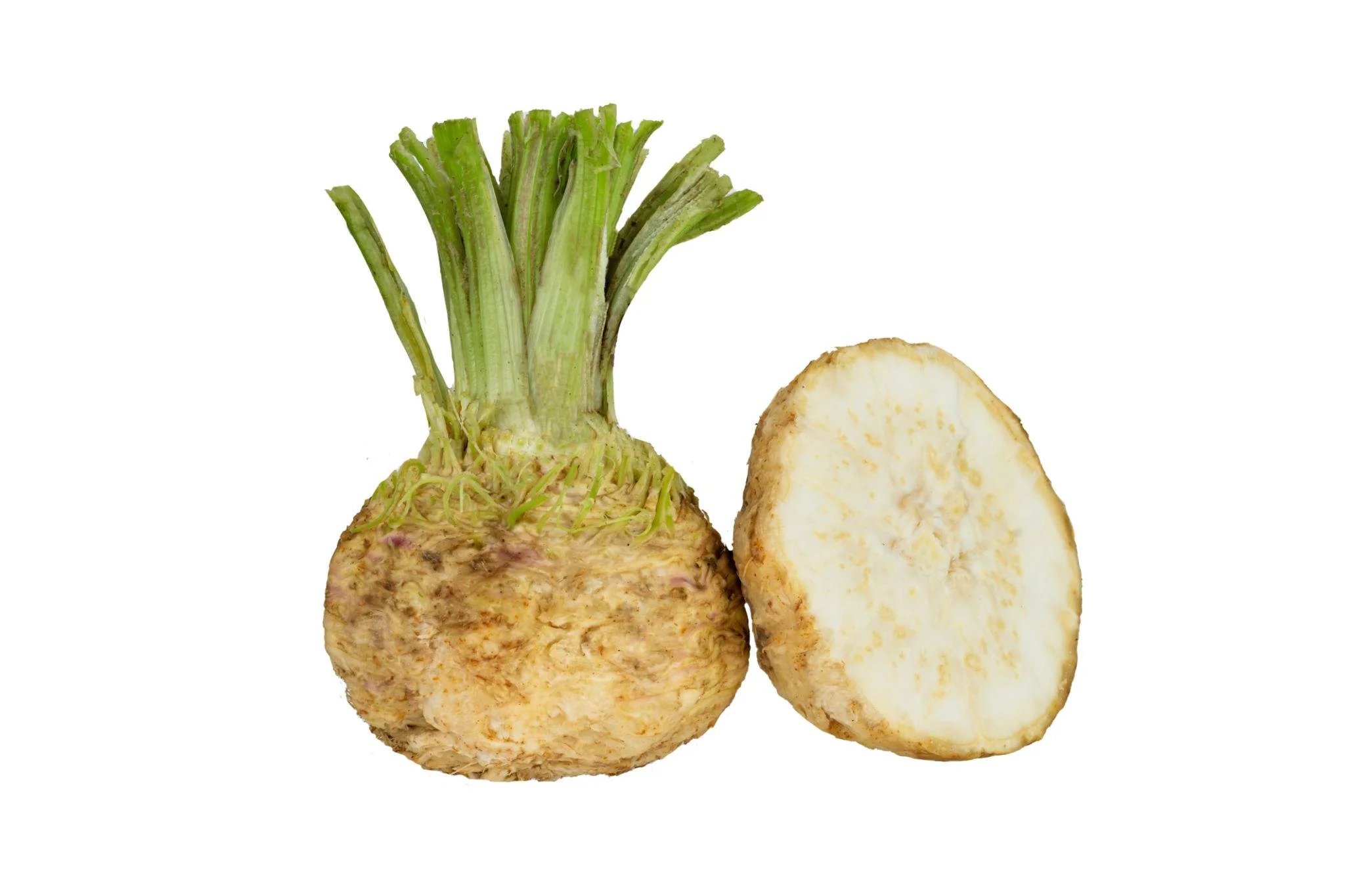
Celery root, also known as celeriac, is a knobby root vegetable with a subtle celery-like flavor. When cooked, it becomes creamy and slightly nutty, making it a versatile ingredient in plant-based cooking.
Celery root comes from a variety of celery grown specifically for its edible root rather than its stalks. Although the outside appears rough and irregular, the inside is pale, firm, and surprisingly delicate in flavor.
Its taste resembles celery but with a mild nuttiness that becomes richer when cooked. Celeriac can be roasted, mashed, pureed into soups, or shredded raw into salads and slaws.
In addition to its versatility, celery root provides fiber, vitamin C, and potassium that support overall wellness and balanced plant-forward meals.
Key Benefits
• Supports digestive wellness with fiber
• Supports immune wellness with vitamin C
• Provides antioxidants that support cellular health
• Supports heart-supportive eating patterns
• Adds creamy texture to plant-based dishes
Key Nutrients
• Vitamin C
• Fiber
• Potassium
• Vitamin B6
• Phosphorus
• Antioxidants
Nutrition Facts (per 1 cup cooked celery root)
• Calories: ~66
• Carbs: ~14 g
• Fiber: ~3 g
• Protein: ~2 g
• Fat: ~0 g
• Sugar: ~2 g
Source: USDA FoodData Central
Easy Ways to Eat Celery Root
• Roast cubes with olive oil and herbs
• Mash with potatoes or cauliflower
• Blend into creamy soups
• Shred raw into salads or slaws
• Add to vegetable stews
• Roast alongside other root vegetables
How to Choose and Store
How to choose
Look for firm roots that feel heavy for their size with no soft spots.
How to store
• Store in the refrigerator crisper drawer
• Wrap loosely in a produce bag
How long it lasts
About 2–3 weeks in the refrigerator.
Pairs Well With
• Potatoes
• Apples
• Parsnips
• Garlic
• Thyme
• Mushrooms
• Lemon
Conditions Celery Root May Help Support
This section is not medical advice.
Celery root may support:
• Digestive health support
• Immune wellness support
• Heart-supportive nutrition patterns
• Balanced plant-forward nutrition