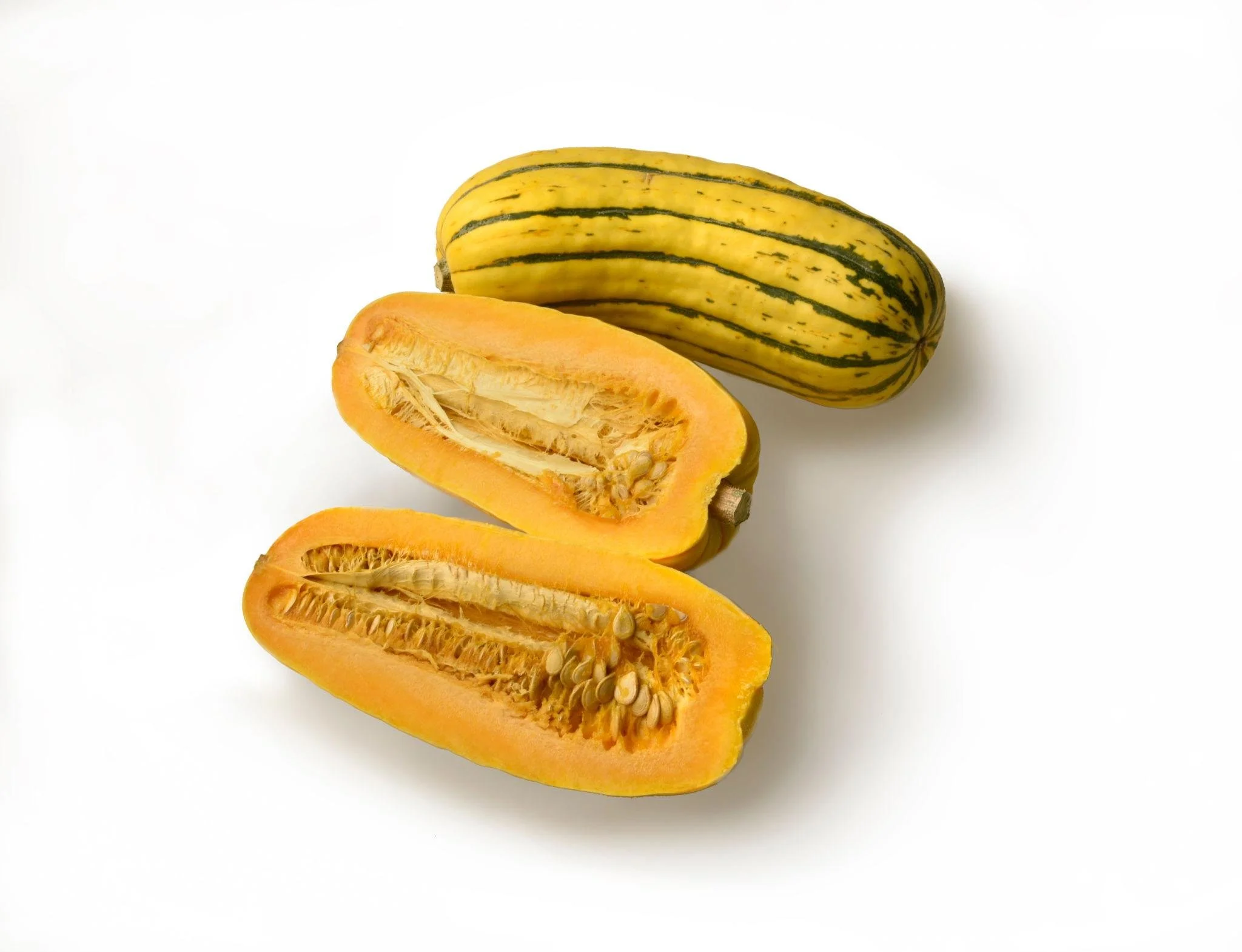
Delicata squash is a sweet, tender winter squash known for its creamy texture and edible skin. Its naturally rich flavor makes it a favorite for roasting and plant-based comfort meals.
Delicata squash is sometimes called “sweet potato squash” because of its naturally sweet flavor and soft, creamy flesh. Unlike many winter squash varieties, its skin becomes tender when cooked, which means it can be sliced and roasted without peeling.
Its beautiful striped skin and rich flavor make delicata squash both visually appealing and easy to cook. Roasting brings out its natural sweetness and caramelized edges, making it perfect for grain bowls, salads, and hearty plant-forward meals.
In addition to flavor, delicata squash provides fiber, vitamin A, and potassium that support overall wellness.
Key Benefits
• Supports eye health with vitamin A
• Supports digestive wellness with fiber
• Provides antioxidants that support cellular health
• Supports heart-supportive eating patterns
• Adds natural sweetness and richness to meals
Key Nutrients
• Vitamin A
• Fiber
• Vitamin C
• Potassium
• Magnesium
• Antioxidants
Nutrition Facts (per 1 cup cooked delicata squash)
• Calories: ~80
• Carbs: ~18 g
• Fiber: ~3 g
• Protein: ~2 g
• Fat: ~0 g
• Sugar: ~4 g
Source: USDA FoodData Central
Easy Ways to Eat Delicata Squash
• Roast sliced rounds with olive oil and herbs
• Add roasted pieces to grain bowls
• Toss into fall salads
• Stuff halves with grains or vegetables
• Sauté with onions and garlic
• Serve alongside roasted vegetables
How to Choose and Store
How to choose
Look for firm squash with cream-colored skin and green or orange stripes.
How to store
• Store in a cool, dry place
• Refrigerate after cutting
How long it lasts
Whole delicata squash can last about 2–3 weeks when stored properly.
Pairs Well With
• Sage
• Maple
• Garlic
• Kale
• Quinoa
• Mushrooms
• Lentils
Conditions Delicata Squash May Help Support
This section is not medical advice.
Delicata squash may support:
• Eye health support
• Digestive health support
• Heart-supportive nutrition patterns
• Balanced plant-forward eating