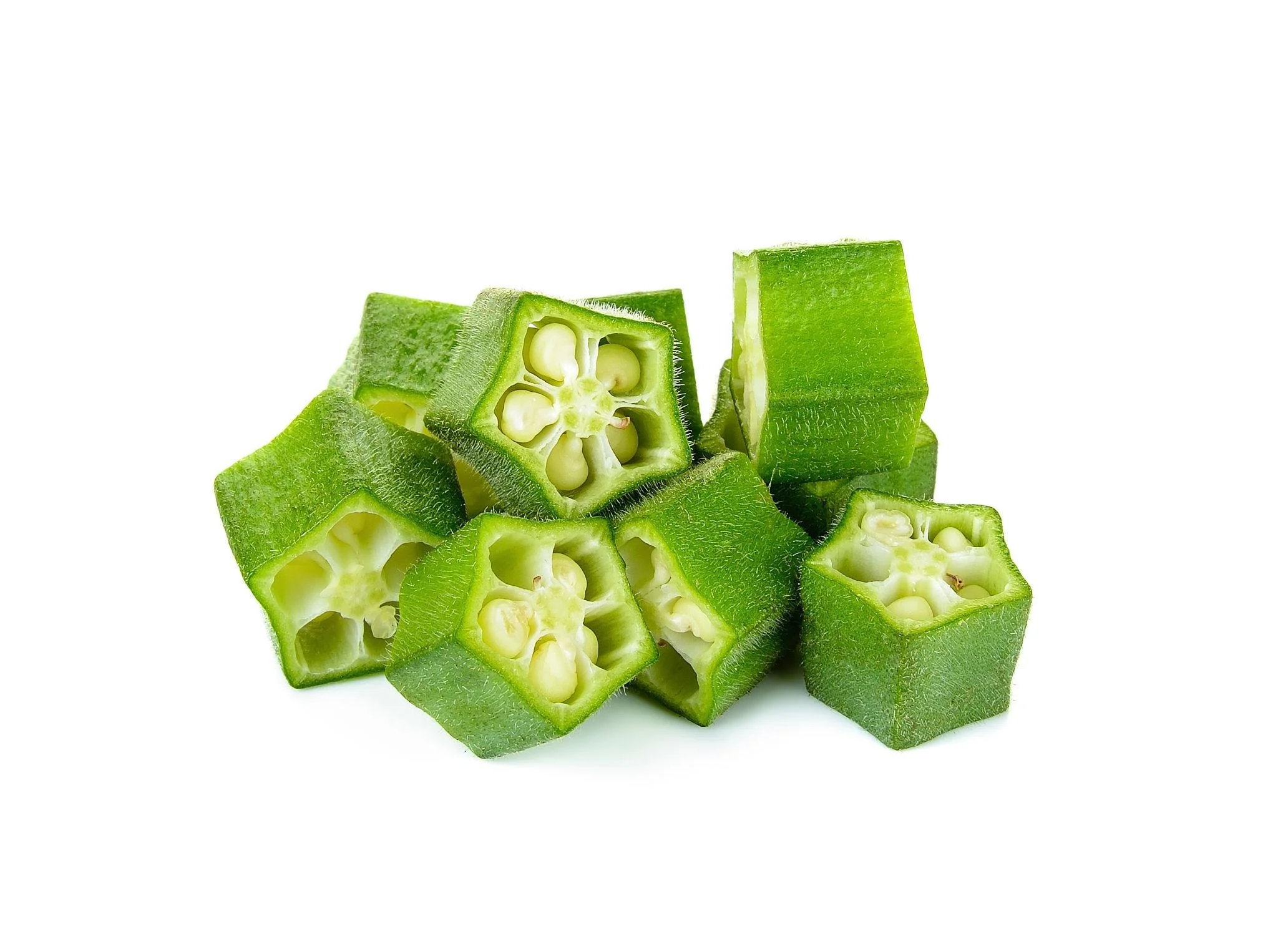
Okra is a green pod vegetable known for its unique texture and subtle flavor. It’s commonly used in Southern, African, and Middle Eastern cooking.
When cooked, okra releases a natural thickening quality that works beautifully in stews and soups. It’s rich in fiber and supports balanced, satisfying plant-based meals.
Key Benefits
• Supports digestive regularity
• Encourages steady blood sugar
• Adds natural thickening to soups and stews
• Contributes antioxidant nutrients
• Supports heart-supportive eating patterns
Key Nutrients
• Fiber
• Vitamin C
• Vitamin K
• Folate
• Magnesium
Nutrition Facts (per 1 cup cooked okra)
• Calories: ~33
• Carbs: ~7g
• Fiber: ~3g
• Protein: ~2g
• Fat: ~0g
Source: USDA FoodData Central
Easy Ways to Eat Okra
• Add to vegetable gumbo
• Roast until lightly crisp
• Stir into tomato stews
• Sauté with garlic and onions
• Add to curries
How to Choose and Store
How to choose
Look for firm, bright green pods without soft spots.
How to store
• Refrigerate unwashed in produce drawer
How long it lasts
2 to 3 days refrigerated
Pairs Well With
• Tomatoes
• Garlic
• Onion
• Brown rice
• Bell peppers
Conditions Okra May Help Support (Plant Pantry Wellness Notes)
This section is not medical advice.
Okra may be helpful for those focusing on
• Blood sugar management
• Digestive wellness
• Heart-supportive eating patterns
For medical nutrition therapy, consult a licensed provider.