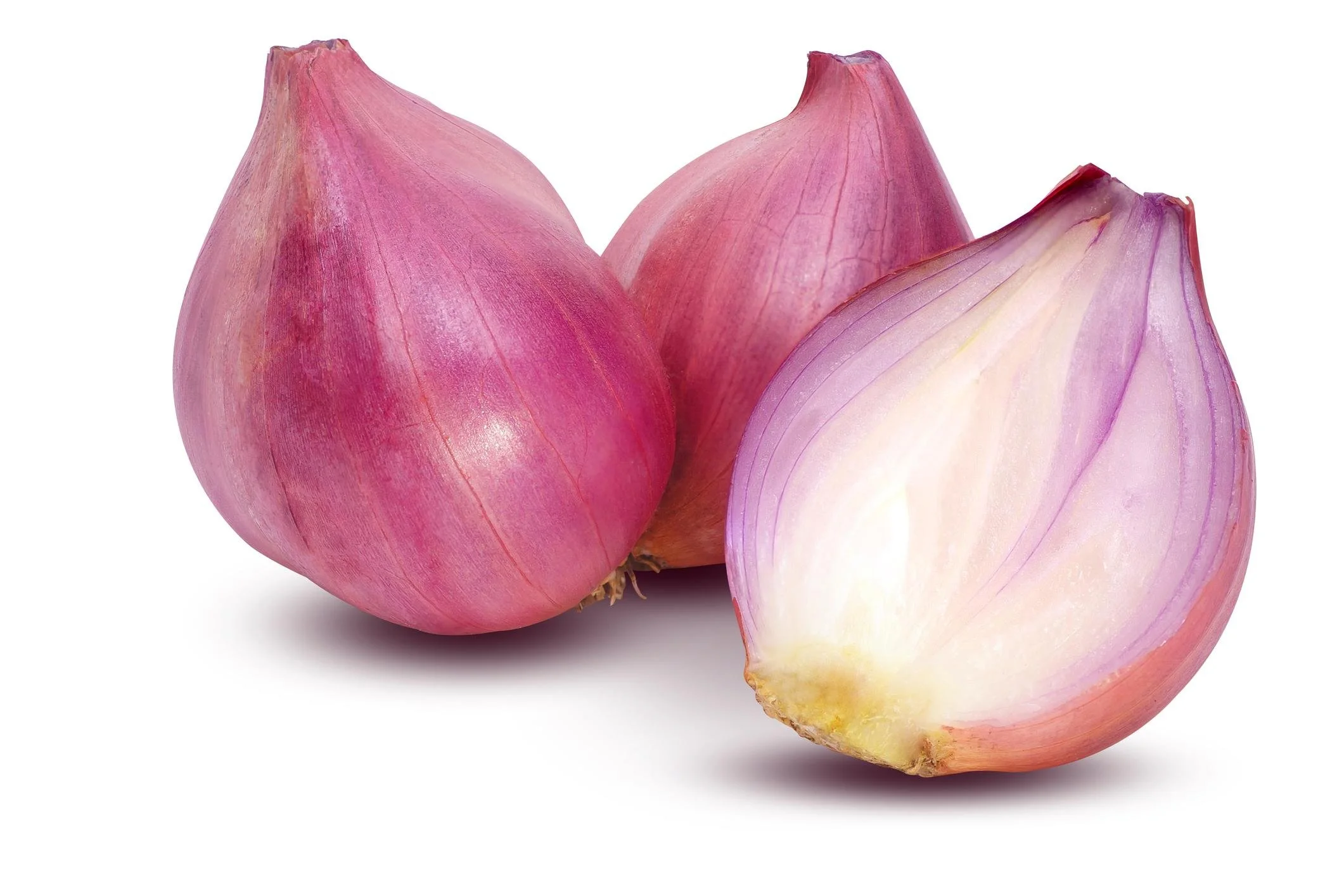
Shallots are small, elongated members of the onion family with a mild, slightly sweet flavor. They offer the depth of onions with a softer, more delicate finish.
Often used in French and Mediterranean cooking, shallots add gentle complexity to dressings, sauces, roasted vegetables, and grain dishes. Their subtle flavor makes them especially helpful for building layers in plant-based meals without overpowering other ingredients.
Key Benefits
• Adds depth without sharp intensity
• Supports vegetable-forward cooking
• Contributes antioxidant plant compounds
• Encourages flavor layering with whole foods
• Low-calorie flavor enhancer
Key Nutrients
• Vitamin C
• Vitamin B6
• Folate (small amounts)
• Fiber
• Antioxidant compounds
Nutrition Facts (per 1/2 cup chopped raw shallots)
• Calories: ~35
• Carbs: ~8g
• Fiber: ~1g
• Protein: ~1g
• Fat: ~0g
Source: USDA FoodData Central
Easy Ways to Eat Shallots
• Mince into salad dressings
• Roast with root vegetables
• Sauté as a soup base
• Stir into grain bowls
• Add to vinaigrettes
How to Choose and Store
How to choose
Look for firm bulbs with dry, papery skin and no soft spots.
How to store
• Store whole shallots in a cool, dry place
• Refrigerate once cut
How long it lasts
• Whole: several weeks in pantry
• Cut: 3 to 5 days refrigerated
Pairs Well With
• Olive oil
• Vinegar
• Mushrooms
• Lentils
• Spinach
Conditions Shallots May Help Support (Plant Pantry Wellness Notes)
This section is not medical advice.
Shallots may support
• Heart-supportive eating patterns
• Antioxidant intake through vegetable variety
• Digestive wellness
For medical nutrition therapy, consult a licensed provider.