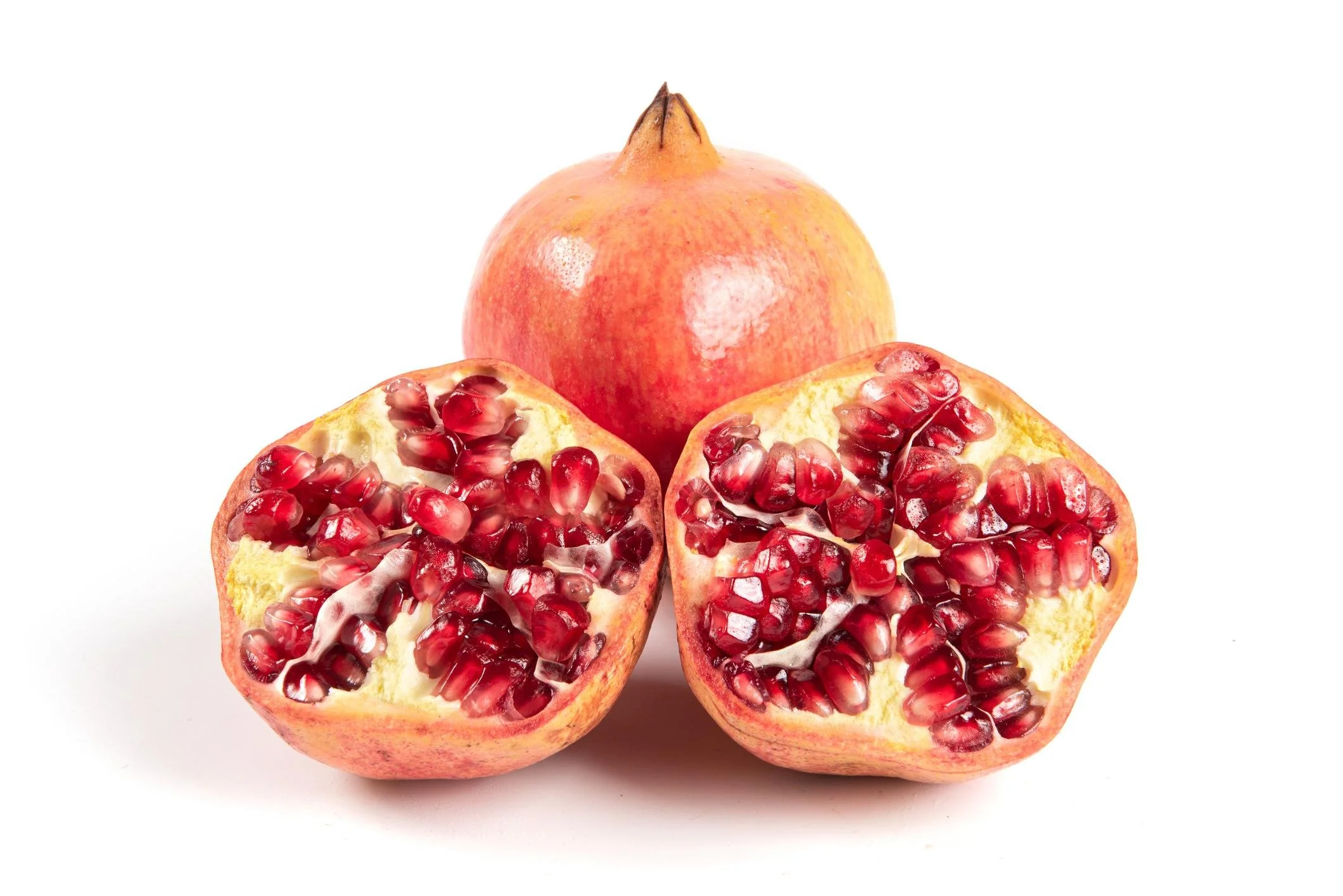
Juicy, vibrant, and antioxidant-rich, pomegranate adds color, crunch, and brightness to plant-based dishes.
Pomegranate is a jewel-toned fruit filled with juicy seeds called arils that deliver a sweet-tart burst of flavor. It adds color, texture, and richness to plant-based meals.
Each aril contains juice and a small seed, creating a refreshing crunch. Pomegranate is often used in salads, grain bowls, and as a garnish for both sweet and savory dishes.
In plant-based cooking, pomegranate is valued for its vibrant color and ability to enhance both flavor and presentation.
Pomegranate provides antioxidants, fiber, and vitamin C that support overall wellness.
Key Benefits
• Provides antioxidants that support cellular health
• Supports heart-supportive nutrition patterns
• Supports immune wellness with vitamin C
• Adds vibrant color and texture to meals
• Supports digestive wellness with fiber
Key Nutrients
• Vitamin C
• Fiber
• Potassium
• Antioxidants
Nutrition Facts (per 1 cup arils)
• Calories: ~145
• Carbs: ~33 g
• Fiber: ~7 g
• Protein: ~3 g
• Fat: ~2 g
• Sugar: ~24 g
Source: USDA FoodData Central
Easy Ways to Eat Pomegranate
• Sprinkle over salads
• Add to grain bowls
• Top oatmeal or yogurt alternatives
• Blend into smoothies
• Use as a garnish for roasted vegetables
• Enjoy fresh as a snack
How to Choose and Store
How to choose
Look for heavy fruit with firm, smooth skin.
How to store
• Store whole at room temperature or refrigerate
• Store arils in an airtight container in the refrigerator
How long it lasts
Whole: up to 2 weeks refrigerated
Arils: about 5–7 days refrigerated
Pairs Well With
• Spinach
• Kale
• Quinoa
• Citrus
• Walnuts
• Mint
Conditions Pomegranate May Help Support
This section is not medical advice.
Pomegranate may support:
• Heart-supportive nutrition patterns
• Antioxidant-rich nutrition
• Immune wellness support
• Digestive health support