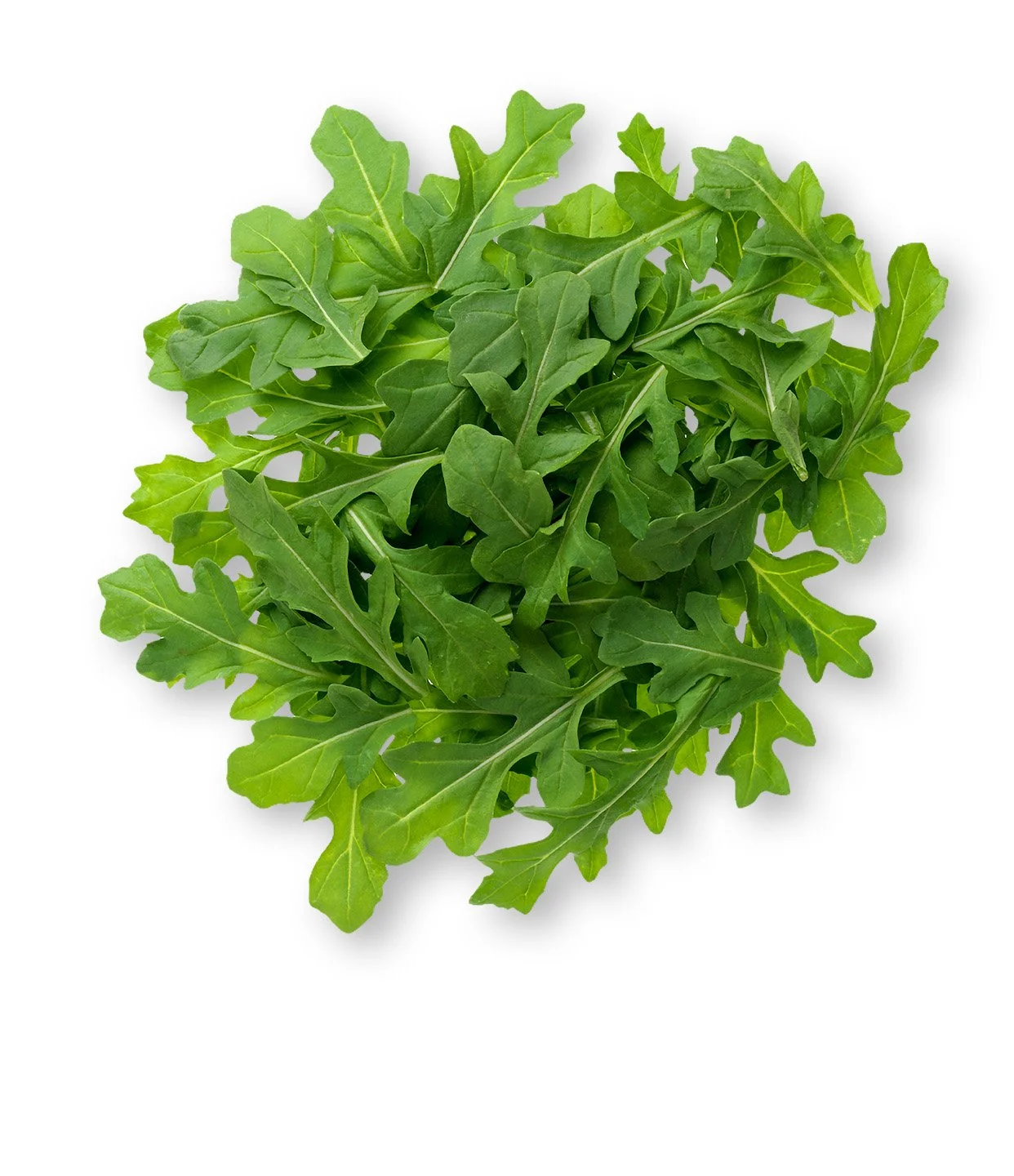
Arugula is the leafy green with opinions — one handful turns a plain salad interesting.
Arugula, sometimes called rocket, is a nutrient-dense leafy green rich in vitamin K and antioxidants. Its delicate leaves offer a peppery bite that pairs beautifully with citrus, grains, and roasted vegetables.
Key Benefits
• Supports bone wellness with vitamin K
• Supports heart health as part of vegetable-rich meals
• Provides antioxidants that support everyday wellness
• Adds bold flavor without heavy sauces
• Easy to incorporate into quick, balanced plates
Key Nutrients
• Vitamin K
• Folate
• Vitamin C
• Calcium
• Potassium
• Antioxidants
Nutrition Facts (per 1 cup raw arugula)
• Calories: ~5
• Carbs: ~1g
• Fiber: ~0.3g
• Protein: ~0.5g
• Fat: ~0g
• Sugar: ~0g
Source: USDA FoodData Central
Easy Ways to Eat Arugula
• Toss with lemon and olive oil for a simple salad
• Add to grain bowls for peppery contrast
• Layer into sandwiches and wraps
• Stir into warm pasta just before serving
• Blend into pesto with walnuts and garlic
• Top flatbreads or roasted vegetables
How to Choose and Store Arugula
How to choose:
Look for bright green leaves that feel crisp and fresh, without yellowing or sliminess.
How to store:
• Store in the refrigerator in a breathable container
• Keep dry to prevent wilting
How long it lasts:
About 3–5 days in the fridge.
Pairs Well With
• Lemon
• Parmesan-style plant-based cheese
• Walnuts
• Beets
• Quinoa
• Cherry tomatoes
• Olive oil
Conditions Arugula May Help Support (Plant Pantry Wellness Notes)
This section is not medical advice. It’s a “what the research suggests” support list.
Arugula may be a helpful food choice for people focusing on:
• Bone wellness support
• Heart health support
• Antioxidant-rich eating patterns
• Digestive wellness support as part of fiber-rich meals
For medical nutrition therapy, always consult a licensed provider.