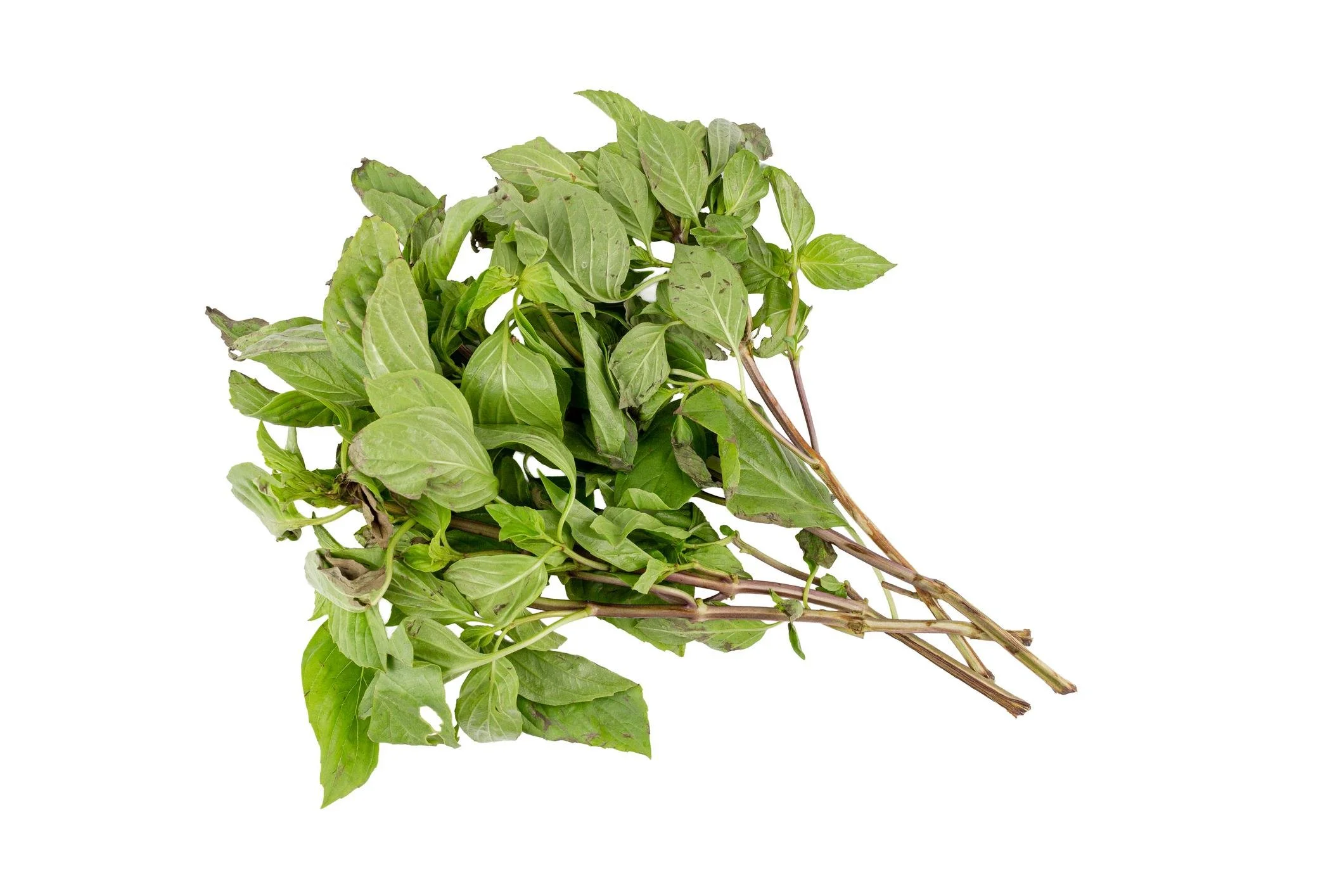
Basil's aroma comes from volatile oils that carry anti-inflammatory plant compounds, plus a surprising dose of vitamin K.
Used widely in Mediterranean and global cuisines, basil is loved for its ability to elevate simple ingredients. Fresh basil brings both flavor and aroma to the plate while contributing beneficial plant compounds that support overall wellness. The tender leaves pair especially well with tomatoes, garlic, citrus, and olive oil, making basil one of the most versatile herbs in plant-based cooking.
Key Benefits
• Supports immune wellness with antioxidants
• Supports heart-supportive eating patterns
• Provides plant compounds that support cellular health
• Adds fresh flavor that can reduce the need for excess salt
• A versatile herb that elevates plant-forward meals
Key Nutrients
• Vitamin K
• Vitamin A
• Vitamin C
• Calcium
• Iron
• Antioxidants
Nutrition Facts
(per 1 cup fresh basil)
• Calories: ~22
• Carbs: ~2.7 g
• Fiber: ~1.6 g
• Protein: ~3.2 g
• Fat: ~0.6 g
Source: USDA FoodData Central
Easy Ways to Eat Basil
• Blend fresh basil into plant-based pesto
• Tear leaves over pasta or roasted vegetables
• Add to tomato salads or grain bowls
• Stir into soups just before serving
• Blend into sauces, dressings, or smoothies
How to Choose and Store
How to choose
Look for bright green leaves that appear vibrant and unwilted. Avoid basil with dark spots or yellowing leaves.
How to store
• Store basil stems in a glass of water at room temperature
• Cover loosely with a plastic bag
• Avoid refrigeration if possible, as basil is sensitive to cold
How long it lasts
Fresh basil typically lasts 3–5 days when stored properly.
Pairs Well With
• Tomatoes
• Garlic
• Olive oil
• Lemon
• Zucchini
• Eggplant
• Pasta
Conditions Basil May Help Support
This section is not medical advice.
Basil may support:
• Immune system support due to antioxidant compounds
• Heart-supportive eating patterns
• Cellular health through plant-based antioxidants
• Anti-inflammatory dietary patterns
• Balanced plant-forward nutrition