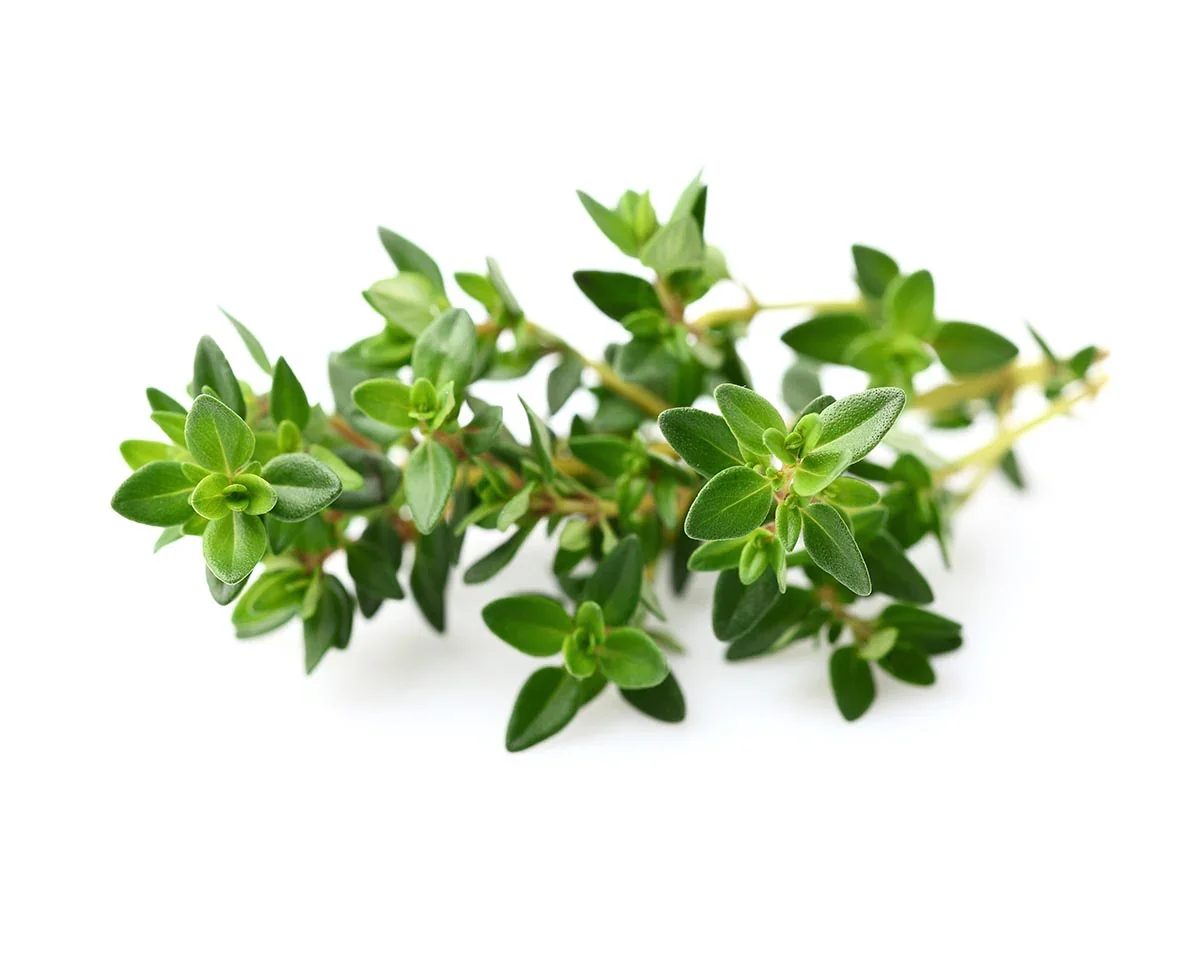
Thyme is a fragrant herb known for its earthy aroma and savory flavor that enhances soups, roasted vegetables, and plant-forward meals. Rich in antioxidants and aromatic plant compounds, thyme adds depth and warmth to many everyday dishes.
Thyme is a small but flavorful herb widely used in Mediterranean and traditional cooking. Its tiny leaves provide a savory, earthy taste that enhances vegetables, beans, grains, soups, and sauces.
Fresh thyme offers a bright herbal flavor, while dried thyme provides a deeper and more concentrated taste. Because thyme holds its flavor well during cooking, it works especially well in slow-simmered dishes, roasted vegetables, and hearty plant-based meals.
In addition to its culinary appeal, thyme contains antioxidants and plant compounds that support balanced plant-forward nutrition.
Key Benefits
• Provides antioxidants that support cellular health
• Supports immune health with beneficial plant compounds
• Adds savory flavor to plant-forward meals
• Helps enhance vegetable-based dishes
• Supports balanced plant-forward eating patterns
Key Nutrients
• Vitamin C
• Vitamin A
• Iron
• Manganese
• Antioxidants
Nutrition Facts
(per 1 tsp dried thyme)
• Calories: ~4
• Carbs: ~1 g
• Fiber: ~0.5 g
• Protein: ~0.1 g
• Fat: ~0.1 g
Source: USDA FoodData Central
Easy Ways to Eat Thyme
• Add thyme to roasted vegetables
• Stir into lentil or bean soups
• Season mushrooms or potatoes
• Add to tomato sauces
• Mix into savory marinades and dressings
How to Choose and Store
How to choose
Look for thyme with vibrant green leaves and firm stems. Avoid herbs that appear dry, wilted, or discolored.
How to store
• Wrap fresh thyme loosely in a damp paper towel
• Store in the refrigerator in a container or bag
How long it lasts
Fresh thyme typically lasts 1–2 weeks when refrigerated properly.
Pairs Well With
• Mushrooms
• Potatoes
• Garlic
• Lemon
• Beans
• Lentils
• Tomatoes
Conditions Thyme May Help Support
This section is not medical advice.
Thyme may support:
• Immune system support due to antioxidant compounds
• Respiratory health support traditionally associated with thyme
• Digestive health support
• Inflammation-supportive dietary patterns
• Cellular health through antioxidant compounds