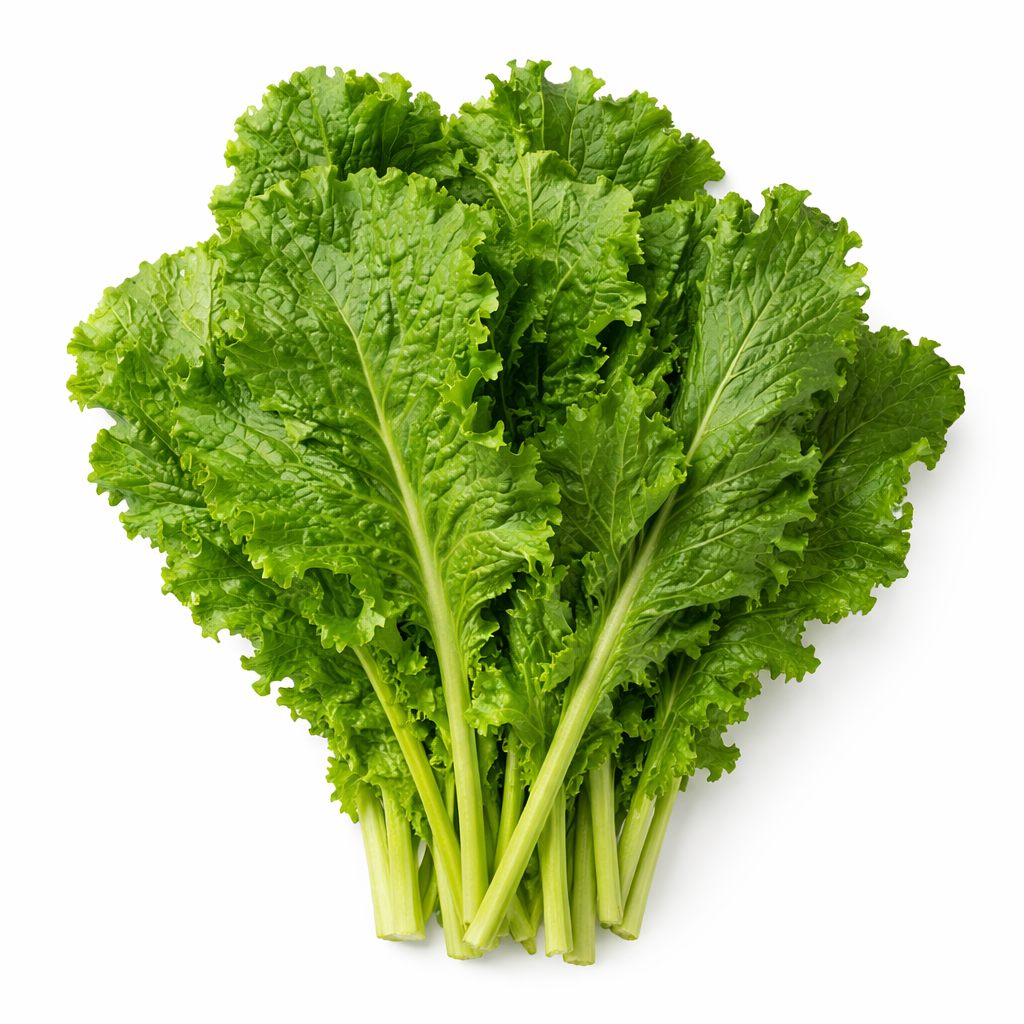
Mustard greens are nutrient-dense cruciferous greens known for their peppery bite and high levels of vitamins A, C, and K. Cooking them mellows the flavor and creates a deeply savory green that works well in soups, sautés, and grain bowls.
Mustard greens are bold leafy greens with a bright, peppery flavor that adds energy and depth to plant-based meals. They belong to the cruciferous vegetable family, the same group as broccoli, cabbage, and kale. When cooked, mustard greens soften and develop a savory richness that pairs beautifully with beans, grains, garlic, and hearty vegetable dishes.
Key Benefits
• Supports immune wellness with vitamin C
• Supports bone wellness with vitamin K
• Supports eye wellness with vitamin A
• Provides plant antioxidants that support cellular health
• Supports digestive wellness with fiber
Key Nutrients
• Vitamin A
• Vitamin C
• Vitamin K
• Calcium
• Potassium
• Fiber
• Antioxidants
Nutrition Facts (per 1 cup cooked mustard greens)
• Calories: ~29
• Carbs: ~5g
• Fiber: ~3g
• Protein: ~2g
• Fat: ~0g
• Sugar: ~1g
Source: USDA FoodData Central
Easy Ways to Eat Mustard Greens
• Sauté with garlic and olive oil
• Add to lentil or bean soups
• Stir into vegetable stir-fries
• Cook with onions and white beans
• Chop and add to grain bowls
• Blend small amounts into savory green smoothies
How to Choose and Store Mustard Greens
How to choose: Look for dark green leaves that are crisp and vibrant. Avoid bunches with yellowing or limp leaves.
How to store
• Store in the refrigerator wrapped loosely in paper towels
• Place in a produce bag in the crisper drawer
How long it lasts: About 3–4 days.
Pairs Well With
• Garlic
• Lemon
• Olive oil
• White beans
• Brown rice
• Sweet potatoes
Conditions Mustard Greens May Help Support (Plant Pantry Wellness Notes)
This section is not medical advice. It’s a “what the research suggests” support list.
Mustard greens may be a helpful food choice for people focusing on:
• Immune wellness support
• Digestive health support
• Heart wellness support
• Anti-inflammatory nutrition goals
• Eye health support
For medical nutrition therapy, always consult a licensed provider.