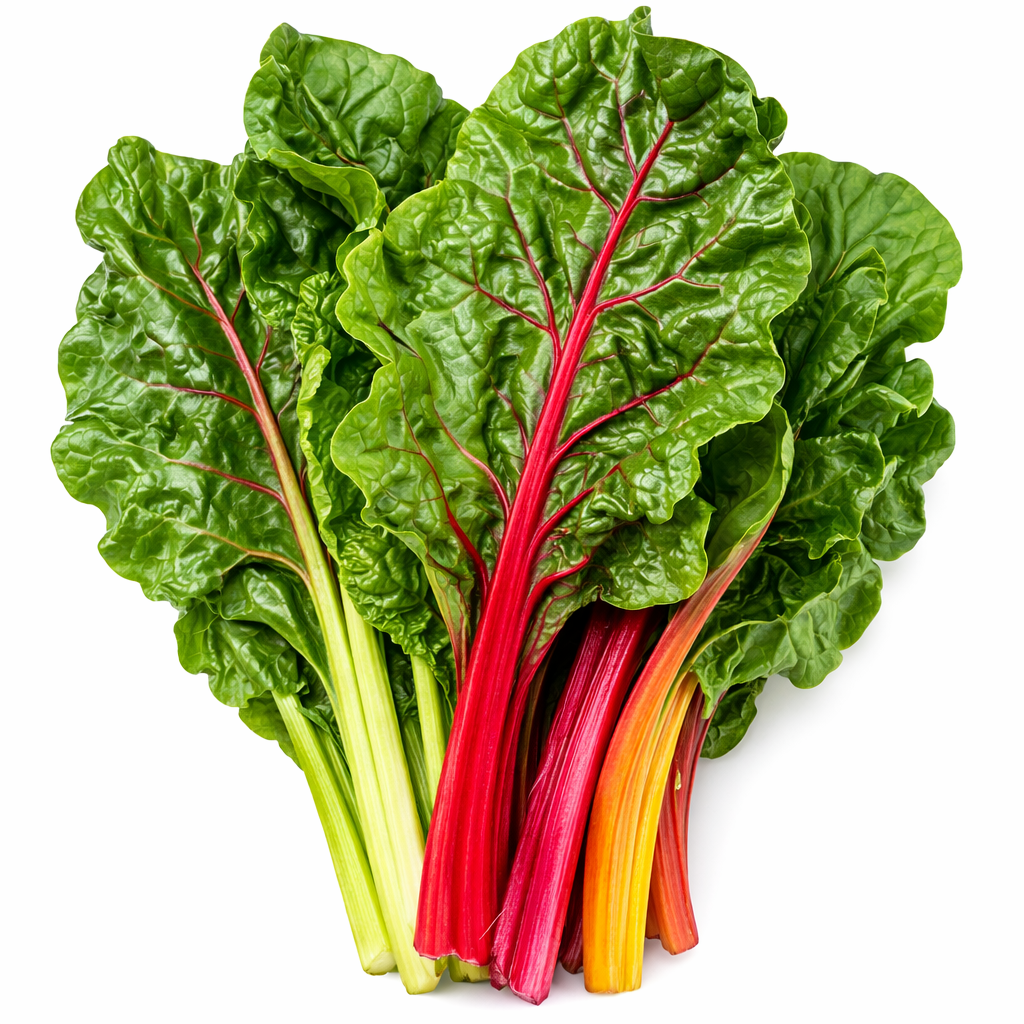
Swiss chard is a vibrant leafy green known for its colorful stems and tender, nutrient-rich leaves. It’s part of the beet family and brings a mild, slightly earthy flavor that becomes silky and mellow when cooked. Swiss chard is a wonderful vegetable for plant-based kitchens because it cooks quickly and works beautifully in soups, grain bowls, sautés, and pasta dishes. The entire plant is edible, including the crunchy stems, which add color and texture to meals.
Quick Snapshot
• Taste: mild, gently earthy
• Texture: silky leaves when cooked; crunchy stems
• Best for: sautés, soups, grain bowls, pasta
• Season: spring and fall
Key Benefits
• Supports bone wellness with vitamin K
• Supports immune wellness with vitamin C
• Supports eye wellness with vitamin A
• Supports digestion with fiber
• Provides antioxidants that support cellular health
Key Nutrients
• Vitamin K
• Vitamin A
• Vitamin C
• Magnesium
• Potassium
• Fiber
• Antioxidants
Nutrition Facts (per 1 cup cooked swiss chard)
• Calories: ~35
• Carbs: ~7g
• Fiber: ~4g
• Protein: ~3g
• Fat: ~0g
• Sugar: ~1g
Source: USDA FoodData Central
Easy Ways to Eat Swiss Chard
• Sauté with garlic and olive oil
• Add to soups and lentil stews
• Stir into pasta dishes with roasted vegetables
• Fold into grain bowls with chickpeas and tahini
• Use in place of spinach in plant-based recipes
• Add chopped leaves to veggie scrambles or tofu scramble
How to Choose and Store Swiss Chard
How to choose: Look for bright green leaves with firm, colorful stems. Avoid leaves that are wilted or yellowing.
How to store
• Store in the refrigerator wrapped loosely in a damp paper towel
• Keep in a produce bag in the crisper drawer
How long it lasts: About 3–5 days in the refrigerator.
Pairs Well With
• Garlic
• Lemon
• Olive oil
• Chickpeas
• White beans
• Tomatoes
Conditions Swiss Chard May Help Support (Plant Pantry Wellness Notes)
This section is not medical advice. It’s a “what the research suggests” support list.
Swiss chard may be a helpful food choice for people focusing on:
• Bone health support
• Digestive wellness support
• Heart health support
• Eye wellness support
• Anti-inflammatory nutrition goals
For medical nutrition therapy, always consult a licensed provider.