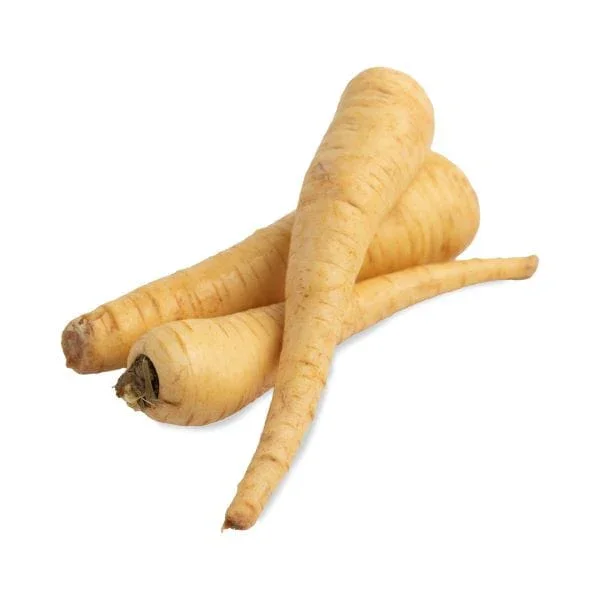
Parsnips are fiber-rich root vegetables that provide vitamin C, potassium, and antioxidants. Their naturally sweet flavor makes them ideal for roasting, mashing, and adding depth to soups and stews.
Parsnips are a sweet, earthy root vegetable that resemble large white carrots. When cooked, their flavor becomes warm and slightly nutty, making them a favorite for roasting, soups, and cozy plant-based meals. Their natural sweetness deepens when roasted, creating caramelized edges and a creamy interior.
Key Benefits
• Supports digestive wellness with fiber
• Supports immune wellness with vitamin C
• Supports heart wellness with potassium
• Provides slow-digesting carbohydrates for steady energy
• Adds natural sweetness to savory plant-based meals
Key Nutrients
• Fiber
• Vitamin C
• Potassium
• Folate
• Antioxidants
Nutrition Facts (per 1 cup cooked parsnips)
• Calories: ~100
• Carbs: ~24g
• Fiber: ~6g
• Protein: ~2g
• Fat: ~0g
• Sugar: ~6g
Source: USDA FoodData Central
Easy Ways to Eat Parsnips
• Roast with olive oil and thyme
• Add to vegetable soups and stews
• Mash with potatoes for creamy texture
• Roast with carrots and squash
• Blend into creamy root vegetable soup
How to Choose and Store
How to choose: Look for parsnips that are firm with smooth, pale skin and no soft spots.
How to store
• Store in the refrigerator crisper drawer
• Wrap loosely in a produce bag
How long it lasts: About 2–3 weeks in the refrigerator.
Pairs Well With
• Thyme
• Garlic
• Maple
• Carrots
• Potatoes
• Lentils
Conditions Parsnips May Help Support
Parsnips may support:
• Digestive wellness support
• Heart health support
• Balanced blood sugar routines
• Nourishing plant-forward meals