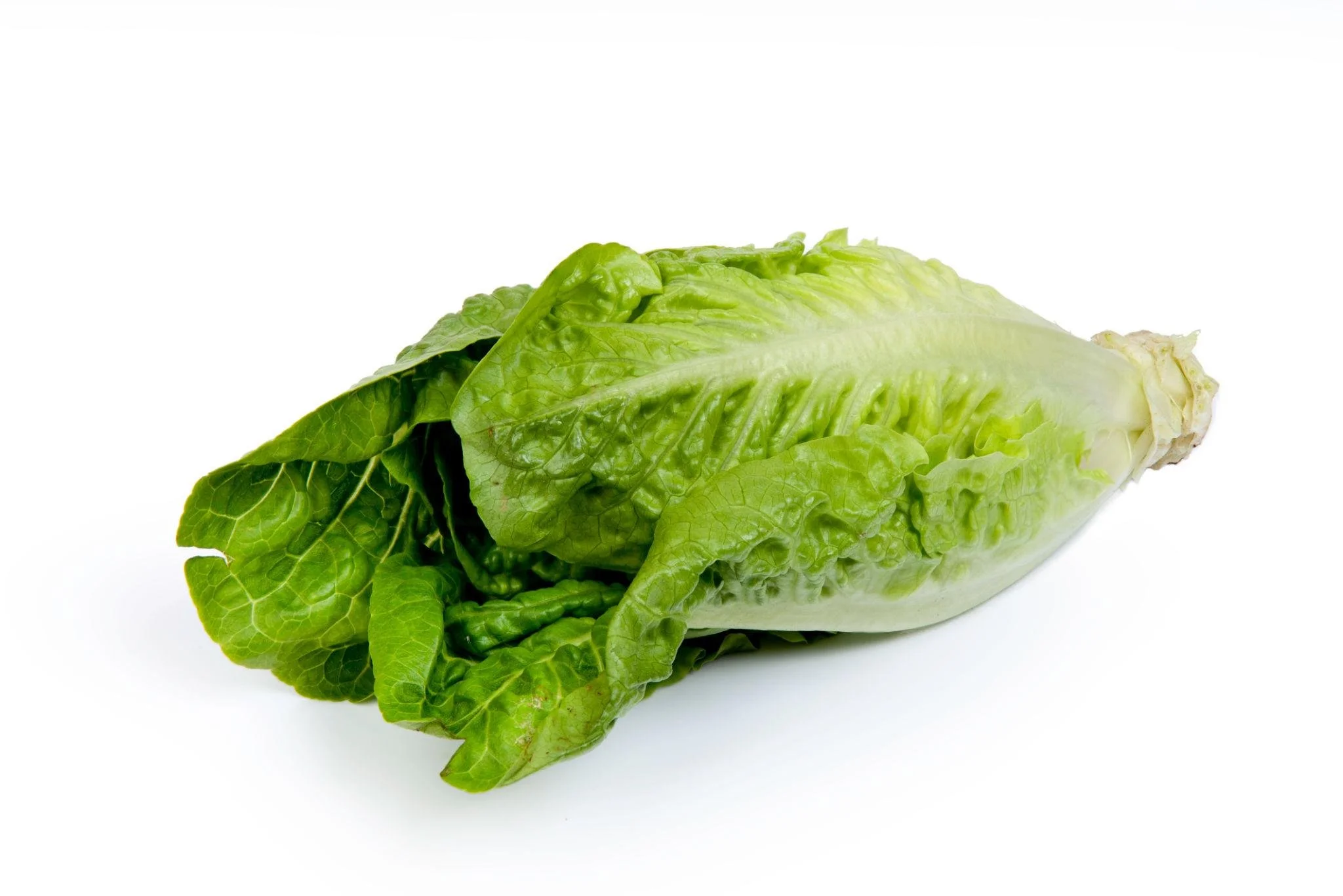
Romaine is mostly water and crunch on the tongue, but the darker outer leaves hold real folate and vitamin A.
Overview
Romaine Lettuce is one of the most recognizable salad greens thanks to its crisp texture and refreshing flavor. Its sturdy leaves make it ideal for hearty salads, lettuce wraps, and plant-based bowls. Romaine adds satisfying crunch while delivering hydration and key nutrients that support everyday wellness.
Key Benefits
• Supports eye health with vitamin A
• Supports hydration due to high water content
• Supports digestion with fiber
• Supports bone health with vitamin K
• Adds satisfying crunch to plant-based meals
Key Nutrients
• Vitamin A
• Vitamin K
• Folate
• Vitamin C
• Fiber
• Potassium
Nutrition Facts (per 1 cup chopped romaine lettuce)
• Calories: ~8
• Carbs: ~1.5 g
• Fiber: ~1 g
• Protein: ~0.6 g
• Fat: ~0 g
• Sugar: ~1 g
Source: USDA FoodData Central
Easy Ways to Eat Romaine
• Build hearty plant-based salads
• Use whole leaves for lettuce wraps
• Chop into grain bowls
• Add to tacos or burrito bowls
• Layer into sandwiches or veggie burgers
• Toss with chickpeas, cucumber, and lemon dressing
How to Choose and Store
How to choose
Look for heads with crisp leaves and bright green color.
How to store
• Store in the refrigerator crisper drawer
• Wrap loosely in paper towel
How long it lasts
About 5–7 days.
Pairs Well With
• Avocado
• Lemon
• Chickpeas
• Cucumbers
• Tomatoes
• Tahini
• Fresh herbs
Conditions Romaine Lettuce May Help Support
This section is not medical advice.
Romaine lettuce may support:
• Digestive wellness support
• Heart-supportive eating patterns
• Hydration support
• Balanced plant-forward nutrition